Garage Door Conformity and the Risk of Wind-Borne Debris
A garage door looks simple from the street. It opens up, shuts, and goes away into the background until something fails. In Queensland, particularly in cyclone-prone areas, that simplicity can be misleading. A garage door is often one of the largest moving components of a home, and if it fails under wind pressure, the repercussions can be far bigger than a dinged up panel or a noisy motor. A stopped working door can allow wind thrill into the structure, lift roof covering cladding, damages ceilings, and scatter debris into bordering properties.
That is why garage door standards matter a lot. They are not just paperwork, and they are not simply for home builders trying to please a conformity box. They become part of the useful protection a home has against serious climate. When you have seen what a distorted door can do after a strong wind occasion, you stop thinking about it as a small part. It enters into the structure envelope, with actual obligations attached to it.
Why garage doors sit at the centre of wind risk
When high winds strike, the garage door is commonly the largest opening in the house and one of one of the most revealed. If it bows, twists, or is required open, pressure enters the building rapidly. That adjustment in stress can produce a chain reaction. Wall surfaces can be stressed, ceilings can lift, and roofing system parts can separate. Because feeling, the door is not simply a door. It is a barrier that helps maintain the remainder of the framework stable.
The Queensland government has particularly alerted that garage-door failing can result in significant damages inside the structure and can produce dangerous wind-borne debris. That expression matters. Wind-borne particles is not an abstract term. It is what occurs when parts of a framework, or items saved inside a garage, are grabbed by strong winds and developed into projectiles. In a road of homes, that can promptly come to be a neighbourhood trouble instead of a single-property issue.
The practical lesson is uncomplicated. If the door is not strong sufficient for the wind area, or if it has actually been damaged by age, rust, impact, or poor maintenance, it can end up being the factor where the building envelope paves the way. The damages frequently begins there and then spreads.
What conformity suggests in Queensland
Queensland's structure framework rests within the National Building Code, the Queensland Development Code, the Building Act 1975, and the Structure Guideline 2021. That matters because it is the lawful and technological structure that gives garage door criteria their pressure. Criteria Australia keeps in mind that Australian Requirements are volunteer unless referenced by regulation, which is the vital distinction. Once a requirement is picked up by the regulative structure, it stops being optional in practice.
For garage doors in cyclone-prone components of Queensland, the relevant requirement is AS/NZS 4505. Queensland Federal government assistance states garage doors mounted in impacted locations because 2012 must satisfy the wind-rated criterion, and older doors may not have sufficient toughness for cyclonic winds. That is a clear line in the sand. A door can look functional and still be insufficient for the conditions it may face.
This is where a lot of confusion starts for garage door repairs near me prices proprietors. People often assume that since a garage door was installed skillfully, it has to still be certified. However compliance is not iced up in time. The building might have been legal at setup, but age, replacement components, electric motor modifications, and basic wear can all change the risk profile. A compliant door in 2012 can be a questionable one today if it has actually not been maintained, fixed properly, or matched to later website conditions.
For proprietors in Queensland, the compliance inquiry is rarely academic. It is linked directly to wind area, building and construction duration, and the condition of the door setting up. If the site is subjected, the margin for mistake is thin.
Wind-borne debris is not nearly the door itself
The expression wind-borne debris frequently makes people picture roof covering iron, branch fragments, or loose outside furniture. Those are actual risks. Yet garage-door failing can produce particles also. A panel can escape. Tracks can misshape. Bolts can fail. Also components of the opener system can end up being risky if the door is compelled or the device is damaged.
The larger concern is what happens after the door gives way. When wind enters the garage, kept things become part of the risk. A tool chest, storage space containers, sporting gear, and even lightweight home products can be displaced. I have actually seen garages where a storm left the front door undamaged but transformed the inside into a mess of busted shelving and spread items due to the fact that the garage door had stopped working under pressure. The framework itself was after that struck again by its very own contents.
That is why wind-rated garage door standards are so essential. They are not only regarding preventing the door from blowing in. They are likewise concerning minimizing the possibility that the garage comes to be a resource of flying debris. When individuals talk about strength, this is the kind of detail that often gets missed.
A door that is meant to withstand wind tons ought to be dealt with as component of the home's storm envelope. If it is damaged, improperly readjusted, or the wrong kind for the location, the threat climbs swiftly. This is especially real in seaside and cyclone-exposed parts of Queensland, where deterioration and repeated weather exposure can shorten the beneficial life of parts that would last longer inland.
Choosing the ideal door is not only a style decision
There is a tendency to talk about garage doors as though the main choice is appearance. Roller, sectional, tilt, colour, surface, insulation, clever controls, all of that matters. Yet in a wind-prone area, the first inquiry needs to be whether the door is suitable for the place and compliant with the needed standard.
The type of door can affect performance, upkeep, and repair usefulness. A sectional door may suit one developing layout much better, while a roller door may be chosen in one more. Tilt doors have their own auto mechanics and constraints. The choice should not be made on appearances alone, because the expense of obtaining it incorrect shows up later, usually throughout a serious weather event.
For many homeowner, the much better decision boils down to 3 useful inquiries. Is the existing door wind-rated for the place? Is it still in audio condition? And if it is not, does fix make sense or is substitute the much safer course? Those questions are frequently addressed just after a proper assessment, not from a quick look from the driveway.
Here is the factor where industrial garage door fixings and residential repair start to overlap in reasoning. Whether the residential property is a home, a warehouse, or a business site, the crucial problem is lots, wear, and risk-free procedure. A door that is binding, out of placement, or revealing rust might still work on moderate days, yet the actual examination is exactly how it acts when problems become severe. That is where expert analysis makes its keep.
Maintenance that really alters the outcome
Compliance does not finish when the door is set up. It lives or dies via maintenance. This is where many proprietors wander right into incorrect confidence. The door opens up. The electric motor still runs. The remote works. So it needs to be great. That is not a dependable test.
Manufacturers give helpful maintenance guidance because they know where failures often tend to start. Gliderol, for example, recommends routine professional servicing to sustain safety and security and life-span, states panel doors ought to be oiled every 3 to 6 months, and advises servicing every 2 years, with more constant interest for seaside residential or commercial properties. B&D keeps in mind that some residential doors and openers featured a service-linked service warranty plan that depends on servicing within the initial one year and afterwards at least every 2 years. Those conditions are not just guarantee small print. They are an idea regarding exactly how swiftly ignored components can wander out of spec.
Maintenance issues most in places where deterioration, salt air, and heat work against hardware. A seaside property can reveal wear long prior to a comparable door inland does. Springs lose tension, rollers end up being loud, cables age, and bolts corrode. A door might still relocate, yet it may no longer move safely or evenly. If the opener is bring greater than its share of the tons, put on accelerates.
Professional maintenance is important since it catches the issues a home owner normally does not see. Track placement, spring problem, cable wear, brace tiredness, bolt deterioration, and panel stress are not constantly visible from ground degree. A service technician can additionally determine when the electric motor is compensating for a much heavier or rougher door than it must be handling.
A practical servicing rhythm normally comes down to these 5 checks:
- Test the door's balance and movement.
- Inspect springs, cables, rollers, and brackets.
- Check for rust, corrosion, or impact damage.
- Confirm the opener is linked and running correctly.
- Verify the door still fits the wind and website conditions.
That type of routine is small compared with the price of post-storm repair service, ceiling damage, or a failed warranty claim.
Repair, replacement, and the difficult telephone calls owners have to make
People usually ask whether they need to repair an existing door or replace it. There is no global response, yet there are clear patterns. If a door has a basic mistake, such as a separated opener, a flat battery in the remote, or a small adjustment problem, repair service may be sensible. B&D's very own troubleshooting guidance points out that some typical issues are extremely standard and may boil down to batteries or a detached opener. That claimed, once the problem touches springtimes, cords, structural distortion, or rust, the choice ends up being even more serious.
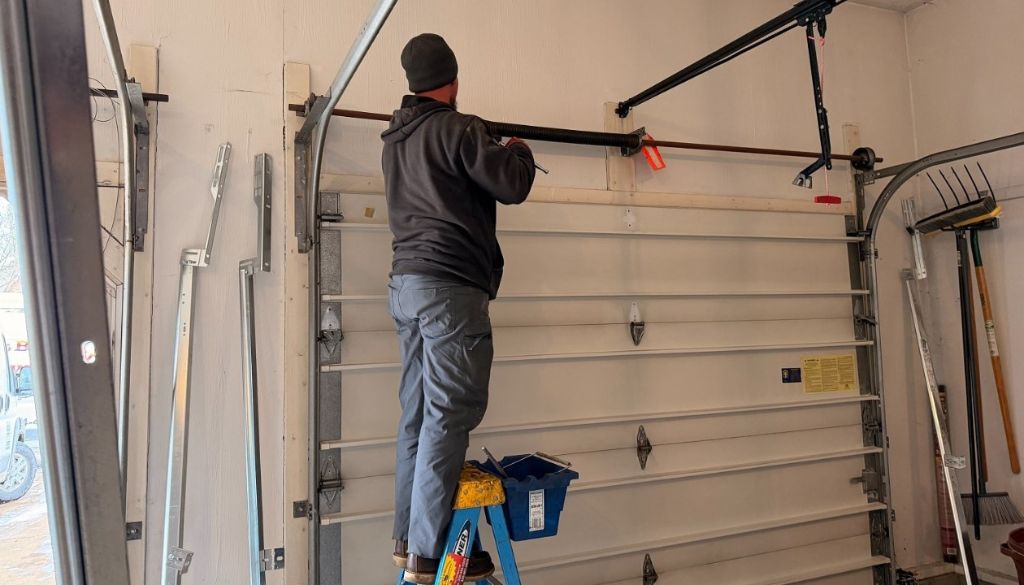
A garage door repair service is not nearly getting it moving once more. It has to do with bring back safe procedure and, in cyclone-prone areas, bring back the ideal degree of resistance. If a door predates current requirements, has been patched repetitively, or shows ongoing deterioration, substitute can be the much more defensible alternative. That is particularly true if the current door is older and there is doubt regarding whether it fulfills the pertinent wind rating.
The replacement choice typically comes down to whether the existing framework is still worth reminding criterion. If panels are damaged, equipment is exhausted, and the opener is currently near the end of its life, piling repairs can set you back more than a scheduled replacement. Proprietors sometimes chase one repair after another due to the fact that each individual concern seems workable. The trouble is that garage doors garage door resource function as a system. If the door, tracks, springs, and opener are all jeopardized in different methods, the system becomes undependable also when each problem looks small on its own.
In bigger residential or commercial properties and commercial setups, the stakes are much more apparent. Industrial garage door repair services generally need to think about functional downtime, safety and security, safety, and the tons the door have to withstand. There is little value in consistently covering a door that can not be relied on bad weather or under frequent usage. The very same concept relates to homes, also if the range is different.
The quieter problem of rust and coastal wear
Corrosion does not attract attention until it has currently done its job. It starts on fasteners, joints, springs, and edges. Then it relocates into the components that hold the system with each other. For homes near the coast, this is among the primary factors normal maintenance issues a lot. The air is harsher, the setting is less flexible, and metal elements age faster.
What makes deterioration harmful is not just the visible corrosion. It can minimize the toughness of important components long before a property owner notifications. A door may still look tidy from the street and still be vulnerable in a storm. That space between look and performance is where lots of failures begin.
A maintenance timetable that suits an inland home might not suffice on the shore. Extra frequent evaluation, timely replacement of rusted elements, and appropriate lubrication all assistance. None of that is glamorous, but it is what keeps the door from becoming a weak point.
There is likewise a human factor right here. Proprietors typically postpone maintenance because the door still seems to work. Technically, that might be true. Practically, it may be establishing a failing pattern that only reveals under tension. The genuine test is not whether it opens today. The real examination is whether it will stay intact when the weather turns.
Smart controls and openers are useful, but they are not the core defence
Modern openers and smart controls are useful. They make access less complicated, improve ease, and can add valuable indications. B&D says some opener models consist of a service sign light, which is a sensible attribute since it reminds the owner that maintenance schedules. However it is simple to overestimate the function of clever features. They do not replace architectural compliance, and they do not make an under-rated door wind-resistant.
A brand-new opener can boost daily usage, especially when the old motor is battling. It can likewise make the door more secure to run if the previous unit was unreliable. However if the door itself is not suitable for the environment, a brand-new motor just fixes component of the issue. It is a support group, not the primary shield.
That is why an appropriate upgrade discussion ought to look at the entire setting up. Door condition, equipment, opener, compliance standing, upkeep history, and website exposure all belong in the very same conversation. Dividing them apart often tends to generate costly half-measures.
What an owner need to be asking before the next storm season
A garage door need to not be evaluated only when something breaks. By the time there shows up damage, the weather might already have actually subjected a weakness that should have been managed earlier. Owners in Queensland, especially in cyclone-prone areas, improve outcomes when they treat the door as a strength thing rather than a benefit item.
The most valuable inquiries are the ones that require a useful solution. Was the door set up to the wind-rated requirement required for the location? Has it been serviced on time? Are there indicators of deterioration, distortion, or too much wear? Is the opener carrying a door that is also heavy or as well harsh for it? And if the door is older, is it still worth fixing, or is substitute the residential garage door repairs near me better investment?
Those inquiries are not theoretical. They go directly to safety and security, property security, and whether the garage door is aiding or threatening the structure in a wind occasion. In the incorrect problems, a weak door can come to be the begin of a really pricey chain reaction. In the right condition, a compliant, properly maintained door does quiet job that the majority of people never see, which is precisely what a protective barrier should do.