Why Queensland Garage Doors Requirement Wind-Rated Performance
Queensland has a way of advising individuals that a garage door is not simply an ease product. For much of the year it opens and closes without much idea, then a serious storm period shows up and suddenly that big opening at the front of the house becomes one of the most vital stress factors in the whole building. If a garage door fails under high wind, the damage can spread out promptly. The door itself may twist or burn out, however the larger issue is what happens next, with wind entering the garage, lifting roofing system cladding, stressing walls and ceilings, and turning loose material into unsafe debris.
That is why wind-rated efficiency issues so much in Queensland, specifically in cyclone-prone areas. The problem is not theoretical, and it is not limited to brand-new builds. Queensland federal government support claims garage doors installed in influenced locations since 2012 need to meet the wind-rated criterion, and older doors might not have sufficient stamina for cyclonic winds. That single point adjustments how owners, contractors, body corporates and residential property supervisors ought to think of garage doors. They are not just matching a layout choice or picking between designs. They are taking care of a structure component that rests inside the state's compliance framework and has a direct duty in shielding the structure.
Garage doors become part of the building envelope
People usually think of the garage as different from your home, particularly in residential setups. In practice, the garage door is part of the building envelope, and in a wind event that matters a great deal. A door that stops working does not just subject stored personal belongings. It can modify internal stress enough to magnify damages across the structure. Queensland government assistance is blunt concerning the repercussions. Garage-door failure can trigger significant damage to walls, ceilings, roof cladding and materials, and can create harmful wind-borne debris.
That is why the requirement is not a technical nicety tucked away in a handbook. It exists because experience in Queensland, particularly after Cyclones Larry and Yasi, showed what takes place when large openings can not withstand the loads they encounter. A 2013 Queensland structure notice claimed the standard was embraced under the NCC for Wind Area C after those occasions. That background matters since it describes the reasoning behind the demand. It was not created for an abstract research laboratory condition. It was shaped by real damages, genuine repairs and genuine risk.
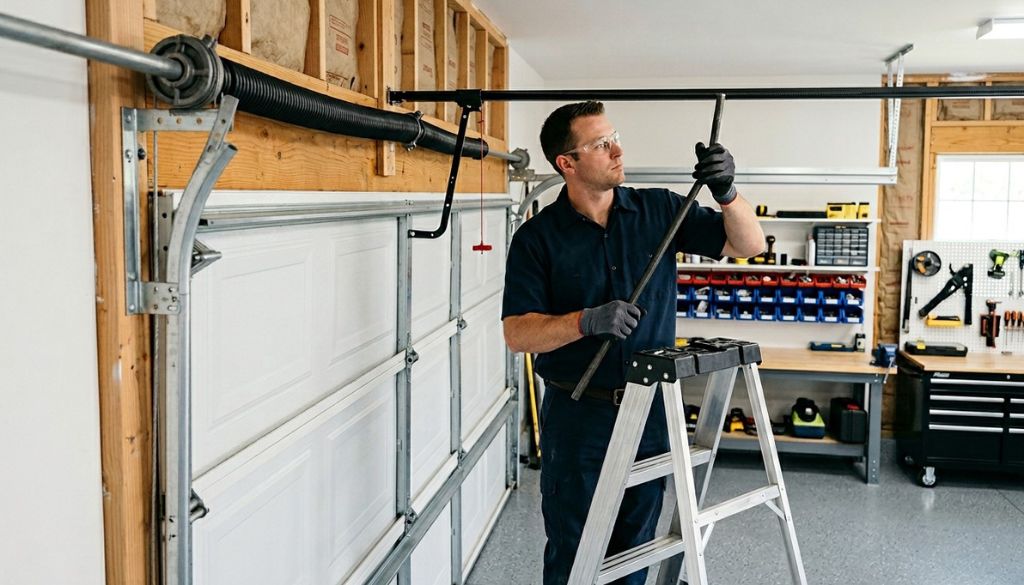
For property owners, this means a garage door ought to be analyzed as component of the home's durability, not as an isolated product. For builders and repairers, it means conventional replacement behaviors are not nearly enough. The new door has to suit the wind environment, the opening, the repairing technique and the compliance assumptions that apply in the area.
What wind-rated efficiency really means
Wind-rated efficiency is not practically a heavier panel or a stronger-looking track. It has to do with a garage door system being suitable for the wind region it should offer, with design and installation lined up to the tons anticipated in that area. In Queensland, that is particularly pertinent in cyclone-prone areas where a door might be asked to stand up to extreme gusts and continual pressure changes.
This is where the expression garage door requirements comes to be more than a compliance slogan. A typical gives the industry a typical criteria, yet only when it is effectively tied to legislation or guideline does it come to be required. Standards Australia notes that Australian Criteria are volunteer unless referenced by regulation, whereupon they can become compulsory. In Queensland, the building framework draws from the National Building Code, the Queensland Development Code, the Building Act 1975 and the Building Policy 2021. Once a basic sits inside that framework, it is no more optional recommendations. It enters into the legal and functional obligation of getting the work right.
For garage doors in cyclone-prone locations, the relevant requirement is AS/NZS 4505. That referral is necessary because it eliminates uncertainty. The door is not being picked on look alone, or on rate alone, or even on basic performance alone. It requires to meet the efficiency expected in the applicable wind area. If a door is mounted in an afflicted location and does not satisfy the needed rating, it might look fine on a tranquil day and still be the powerlessness that creates major damages when the weather turns.
Why older doors should have a hard look
A lot of Queensland homes still have garage doors that were mounted prior to the current wind-rating assumptions took hold. Older doors can be flawlessly functional in a daily sense. They might open efficiently, close dependably and show up structurally audio. The trouble is that everyday operation does not inform you a lot regarding how they will carry out in a cyclone.
Queensland federal government guidance especially alerts that older doors may not have sufficient stamina for cyclonic winds. That caution must not be disregarded as a broad safety measure. In the real life, older doors vary extensively in building, age, upkeep background and installment quality. Some have been repaired repetitively for many years. Some have had openers altered while the door itself continued to be unblemished. Others have actually endured one severe storm and silently gathered concealed wear in springtimes, wires, rollers or fasteners.
The practical lesson is easy. A door that was acceptable years ago might no longer appropriate for today's assumptions, particularly if the house sits in a cyclone-prone zone. When owners ask whether a replacement is worthwhile, the solution usually depends less on how the door looks and more on whether it is really developed and set up for the conditions it must face.
The conformity concern is not just for brand-new construction
One of the mistakes I see is the assumption that conformity just matters when a new house is being developed. In truth, garage doors change with time. They get replaced after impacts, upgraded throughout improvements, or fixed after electric motor failure. Each of those moments creates a chance to move from an older, weaker arrangement to a wind-rated solution, or to accidentally reverse by picking the wrong product for the location.
Queensland's structure structure is built on regulations and codes rather than on guesswork. That suggests owners and contractors require to treat substitutes seriously. If a door is being mounted in an affected location, the correct conventional matters just as much in a retrofit as it carries out in a new construct. The very same relates to linked components. A strong door with the wrong opener arrangement, bad dealing with or ignored upkeep will residential garage door repairs near me not deliver the resilience people expect from it.
This is additionally where business and commercial residential properties are worthy of attention. Huge openings, much heavier duty hardware and more regular procedure all develop added stress. Industrial garage door fixings are seldom practically bring back benefit. They are often regarding restoring safe operation and keeping the building envelope in service. In a coastal or cyclone-prone setup, repair choices need to always be made with wind efficiency in mind, not merely speed up of return to use.
Coastal conditions add an additional layer of wear
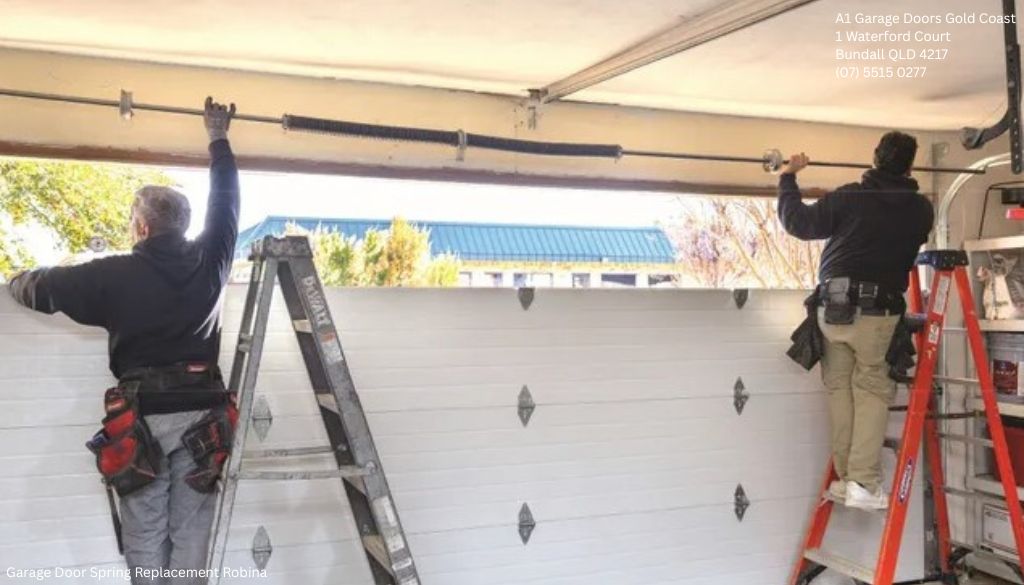
Queensland's coastline brings greater than wind. Salt air, wetness and corrosion all shorten the life of steel parts. That means a garage door in a coastal residential area might need much more frequent focus than one additional inland. It likewise suggests that what appears like a little solution issue can end up being a bigger structural worry if ignored.
Gliderol's maintenance advice, for instance, says panel doors must be oiled every 3 to 6 months and serviced every 2 years, with more constant attention for coastal residential or commercial properties. That is the sort of detail that is simple to neglect up until a door starts dragging, sticking or appearing rough. By then the wear might have spread out past the visible surface. Springs can fatigue, cable televisions can fray and rollers can put on unevenly. On a gusty day, those weaknesses are not academic. They impact just how the door brings tons and exactly how accurately it stays in place.
Coastal homes also encounter a tougher upkeep compromise. Owners want a door that can stand up to wind, but they likewise desire a system that will certainly not rust prematurely. That is one factor professional maintenance issues. A professional professional can see the early indications that a door is shedding its margin of safety and security long before a house owner would discover anything more than sound or slow movement.
Opener choice, servicing and the surprise threats behind a "functioning" door
A garage door can appear functional while still being unsuited for severe problems. The opener may lift the door, the remote may react, and the door might shut at the end of the driveway, however none of that verifies it is ready for storm tons. The opener is just one component of the system.
B&& D notes that a few of its openers consist of a solution indicator light which its doors and openers are designed and tested in Australia. It also suggests that qualified professionals ought to take care of fixings and servicing. That guidance is worth taking seriously. Several typical concerns are stealthily straightforward externally, such as reduced remote batteries or an opener that has actually been detached from the door. Those are the type of faults a home owner might believe, but identifying the cause appropriately still issues. A door that is out of balance or a spring system that is under stress is a various issue altogether.
An electric motor upgrade can make good sense when the door itself is sound and ideal for the location. Smart controls can additionally work for comfort and safety. However none of those improvements must distract from the main inquiry, which is whether the door fulfills the required wind efficiency and whether the whole system is kept to sustain that rating.
For many home owners, one of the most useful routine is to quit treating the door as a history thing and start treating it like any various other important building element. If it is noisy, slow-moving, unequal or has visible wear, it should have interest prior to storm period, not after.
Repair or change, that is often the actual decision
A great deal of garage garage door repairs near me door job sits in the grey location in between repair work and substitute. That choice is particularly sharp in Queensland. If the door is older, does not satisfy current wind-rating assumptions, or has actually been covered continuously, a repair work might bring back function without genuinely recovering durability. In those cases, replacement can be the a lot more liable option.
The estimation is not always straightforward. A properly maintained door with a small component concern may only require targeted job. A more recent wind-rated door with a failed opener or a used springtime may be worth repairing. Yet if the door's standard style is wrong for the wind region, remaining to fix it can end up being a false economy. Every service phone call might keep it relocating, while the underlying susceptability remains untouched.
There is also the issue of service warranty and upkeep conformity. B&D states domestic garage doors and openers bought together can lug a 10-year Overall Confidence Service Warranty, however just if serviced within the initial one year and then at the very least every two years. Gliderol notes that failing to comply with authorised servicing intervals might impact warranty protection, specifically for motorised parts. That is not a tiny information. It demonstrates how strongly suppliers connect performance, upkeep and liability. If a door is expected to execute under load, it needs to be kept in the way the system was developed to be maintained.
How to think of a garage door upgrade in Queensland
Choosing or upgrading a garage door in Queensland ought to start with place, not design. A building in a cyclone-prone area has various requirements from a building in a milder inland suburb. Size, exposure, seaside corrosion, and the age of the existing door all affect the choice. A substitute that fits one website may be inadequate worth on another.
The most practical approach is to ask a few tough questions before cash is invested. Is the existing door certified for the area? Is the opener in great condition or merely making it through? Are springtimes, cable televisions and rollers showing age? Has the door been serviced on schedule? Is the building coastal, which may warrant more regular maintenance? These concerns help separate cosmetic upgrades from significant resilience improvements.
For some owners, the solution will certainly be a full substitute with a wind-rated product that satisfies the pertinent criterion. For others, the best path may be a solution, selective part substitute and closer upkeep intervals. The point is not to upsell every garage door. It is to match the door to the conditions with sufficient severity that it can do its job when the weather condition goes to its worst.
A practical review typically boils down to these 5 checks:
- Confirm whether the door is in a cyclone-prone or impacted area.
- Check whether the current door fulfills AS/NZS 4505 or was installed under the relevant post-2012 requirement.
- Inspect the age and problem of springs, cables, rollers and tracks.
- Review service background, specifically for motorised elements and seaside properties.
- Decide whether repair work recovers compliance and strength, or only recovers movement.
The cost of not doing anything is bigger than the expense of a correct door
Garage door failing can transform one opening right into a domino effect. That is what makes this topic so easy to take too lightly therefore pricey when neglected. A house owner might postpone substitute since the current door still opens up. A body company may hold off the work since there are various other fixings contending for budget plan. A proprietor may concentrate on aesthetic improvements first. Then a storm shows up and the powerlessness ends up being noticeable in the most awful possible way.
Queensland's criteria and support exist because this situation has duplicated typically adequate to necessitate a stronger baseline. The broader building system, consisting of the Queensland Development Code and the National Building Code, identifies that strength begins with parts that are very easy to ignore. Garage doors are large, exposed and crucial. They are additionally among the initial things to stop working when they are not defined and maintained properly.
That does not indicate every door should be the same. Roller, sectional and tilt doors all have their location, and each features compromises in appearance, procedure, price and upkeep. However whatever style is picked, it needs to be matched to the setting. Wind-rated efficiency is the garage door resource component that can not be worked out away in cyclone-prone components of Queensland.
A door that is effectively rated, correctly installed and frequently serviced does more than open and close. It helps hold the structure together when the stress increases, the wind changes and the weather condition stops being common. That is the genuine factor Queensland garage doors need wind-rated performance. It is not about including documents to a product. It has to do with keeping the envelope undamaged, securing the home behind it, and making certain a single opening does not become the point where the whole framework gives way.